
Research Projects
Research in progress and completed studies.
Research in Progress
RESEARCH IN PROGRESS
Resistance at the GEB
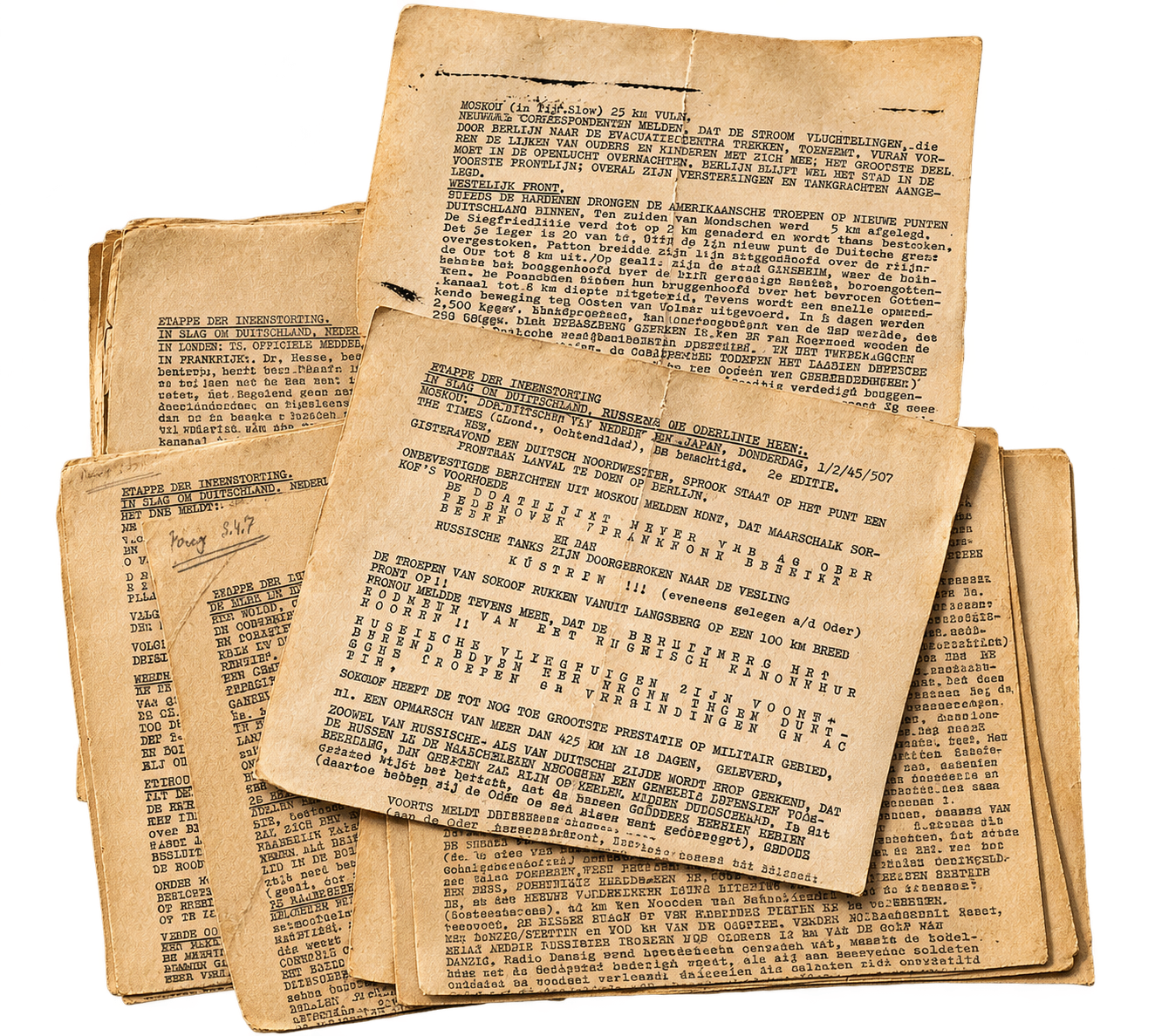
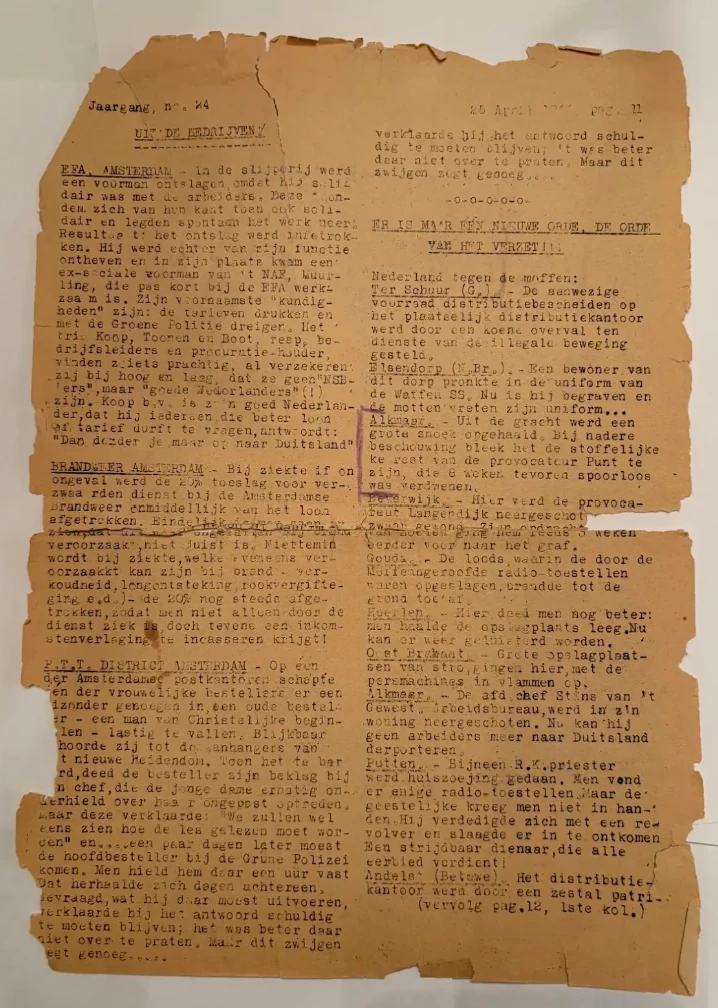
Through one of my clients, I learned about a remarkable resistance network operating from the headquarters of the Amsterdam Municipal Electricity Company (GEB). Thousands of clandestine news bulletins were printed and distributed from there each day, carrying reports from Dutch radio broadcasts transmitted from England. For people who could not listen to these broadcasts themselves, the papers provided updates on the course of the war twice a day.
But printing news was only part of what happened in the building. People in danger, including Jews, were hidden there. Official stamps and identity papers were forged, and a telephone network was made available to the resistance.
Despite all this, surprisingly little has been published about the people involved. They appear to have formed an informal, or ‘wild’, resistance group, without an official name or formal structure. History has largely overlooked them.
Diaries, letters and other surviving documents are now helping me piece together what happened and who was behind these operations. There is still a great deal to investigate, but the stories uncovered so far read almost like a wartime novel.
RESEARCH IN PROGRESS
A missing SS deserter
One of the episodes described in the journal and other documents about the GEB resistance is the story of a young SS deserter. He had volunteered for the Waffen-SS, fought in the East and run away from a hospital in Amsterdam to go into hiding.
He turned up at the home of one of the leaders of the GEB resistance, who could do little else but hide him in the GEB building. With the Germans chasing him and closing in, he was subsequently moved to Alkmaar, close to his parents’ home.
He turned out to be a very dangerous loose cannon who knew too much. The resistance had to take care of him.
They did: he was murdered by the resistance. His death is still a mystery to be solved. If you want to know more about this investigation, follow this link.
RESEARCH IN PROGRESS
Camps for collaborateurs
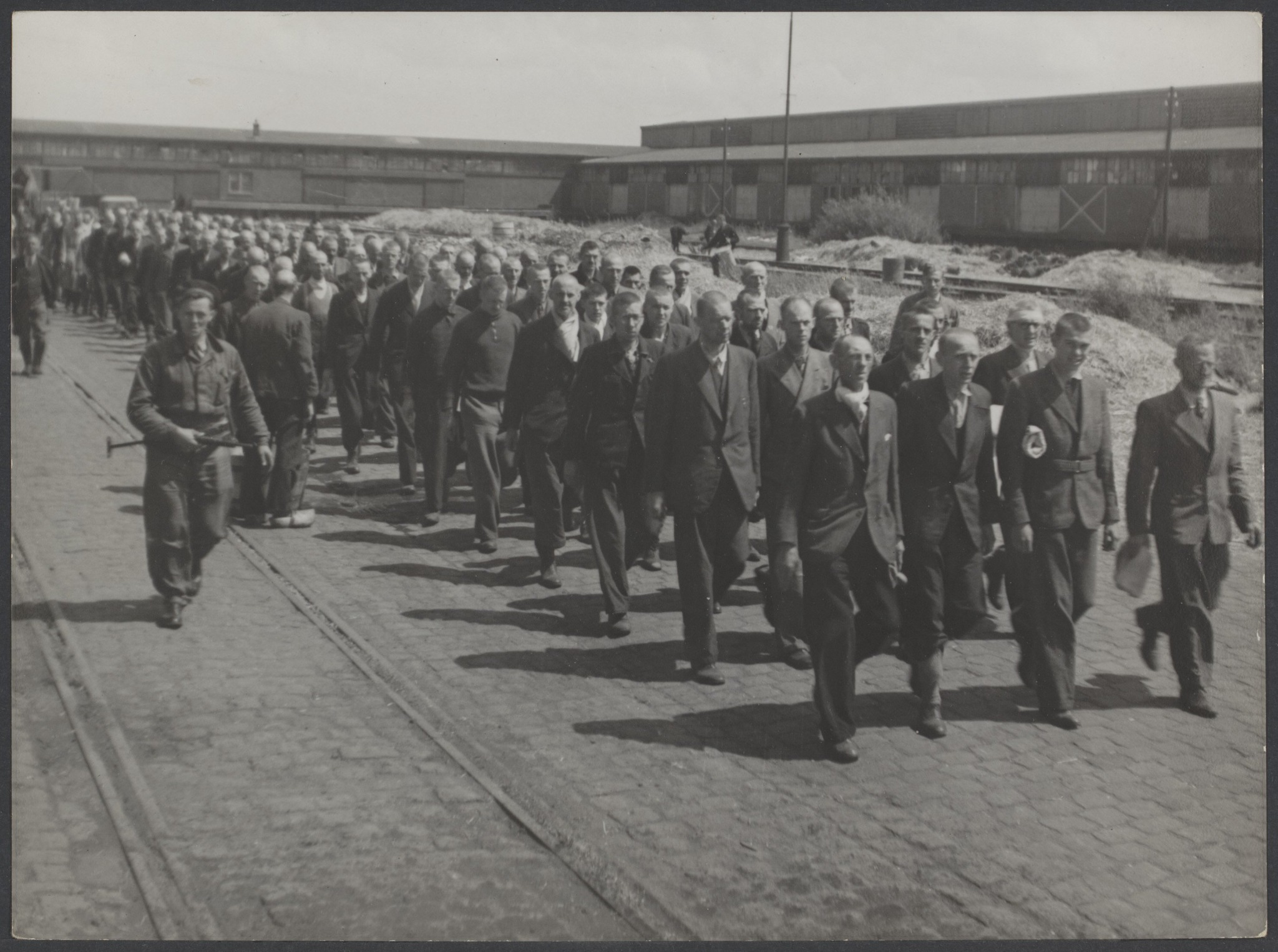
After the liberation of the Netherlands in 1944 and 1945, people who had collaborated with the Germans, belonged to the Dutch Nazi Party (NSB), or were simply suspected of having been on the wrong side were arrested and placed in internment camps.
Around 200 camps operated in the Netherlands, ranging from small, improvised detention centres to large former wartime camps. Estimates suggest that between 140,000 and 200,000 people were detained. Not all of them had committed any crime.
Conditions in many of these camps were appalling. In 2026, the NIOD published two extensive studies documenting the often extremely brutal treatment of prisoners, including physical violence, humiliation and sexual abuse.
There is still much to investigate, particularly about what happened in individual camps. I am currently researching several of these camps in and around my hometown of Alkmaar, trying to establish what happened there and what the people involved experienced.
RESEARCH IN PROGRESS
Karel’s journey to Germany
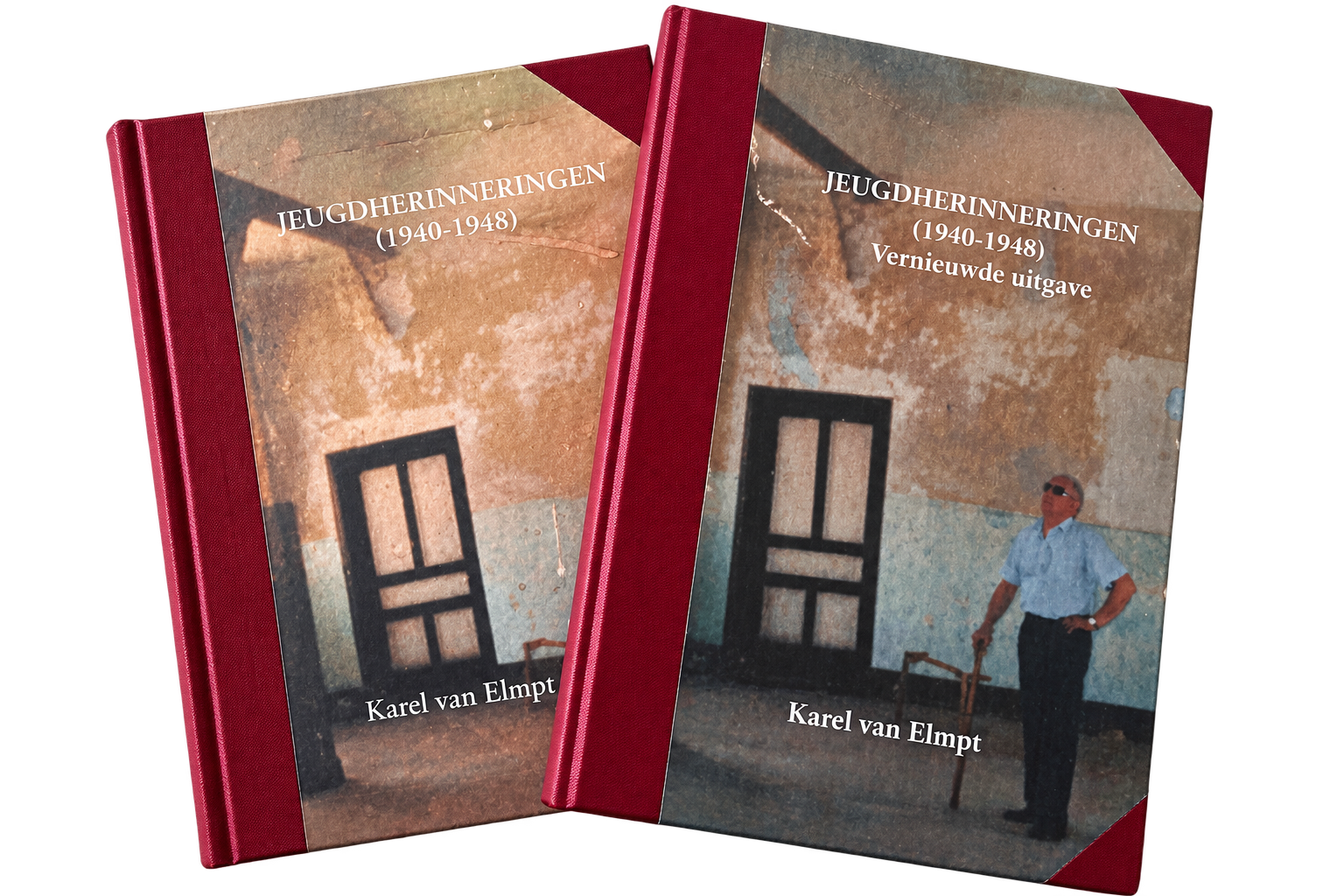
My father wrote a memoir about his youth in Amsterdam during the German occupation. He describes the fear when the Germans invaded, how everyday life continued, and the hardships of living under occupation. Both his parents died during these years, making life particularly difficult for him as a young boy. In the final months of the war, he was sent to Germany for forced labour.
My research into the circumstances of his forced labour is ongoing. You can read more about that research here, and also download an annotated edition of his memoir.
PAST RESEARCH
Completed Research
These are completed pieces of research. Some resulted in a written report or publication; others were shorter investigations into a specific question.
COMPLETED RESEARCH
A granddad’s past
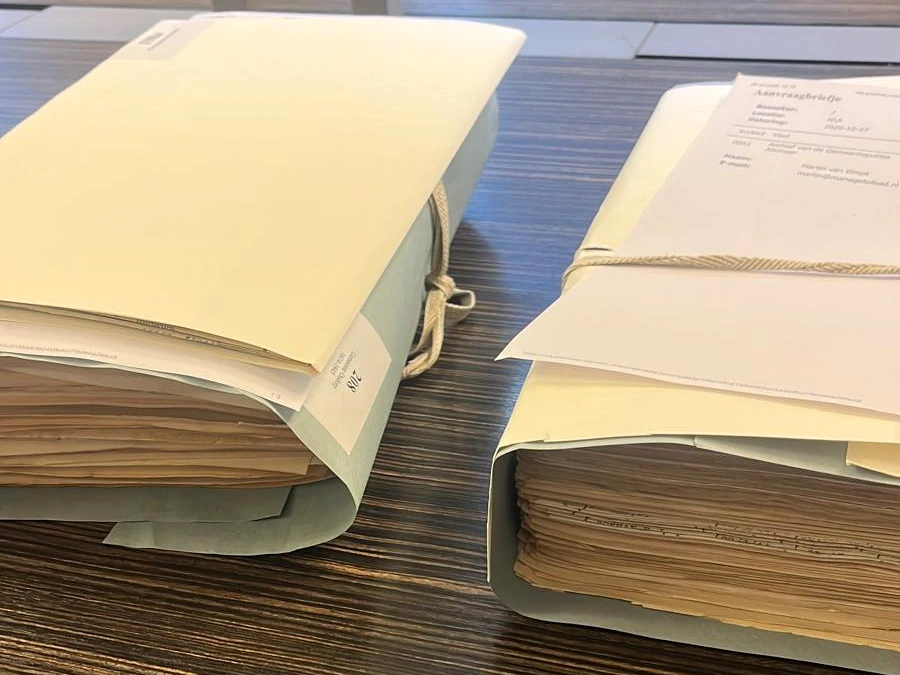
A client wanted to find out whether her grandfather had a wartime past. Her childhood experiences and family history had led her to suspect that something might have happened, but she had no evidence. All she could give me was his name and a possible place of birth.
His name, together with his wife’s, was enough to find a memorial card. This gave me his dates of birth and death, which allowed me to search several wartime archives. Before long, I found a record showing that he had been registered as a guard at a camp for suspected collaborators after the liberation. This was a major discovery.
In recent years, considerable research has been carried out into the conditions in these camps, where the regime was often extremely brutal. My client is now continuing the research herself, trying to establish what happened at the camp where her grandfather worked and what he experienced there.
This discovery was significant in my client’s personal search. It is also a good example of what you may uncover when you start investigating someone’s past. Such discoveries are not always comfortable, particularly when intergenerational trauma is involved. In those circumstances, professional support can be very important.
COMPLETED RESEARCH
A missing Jewish family
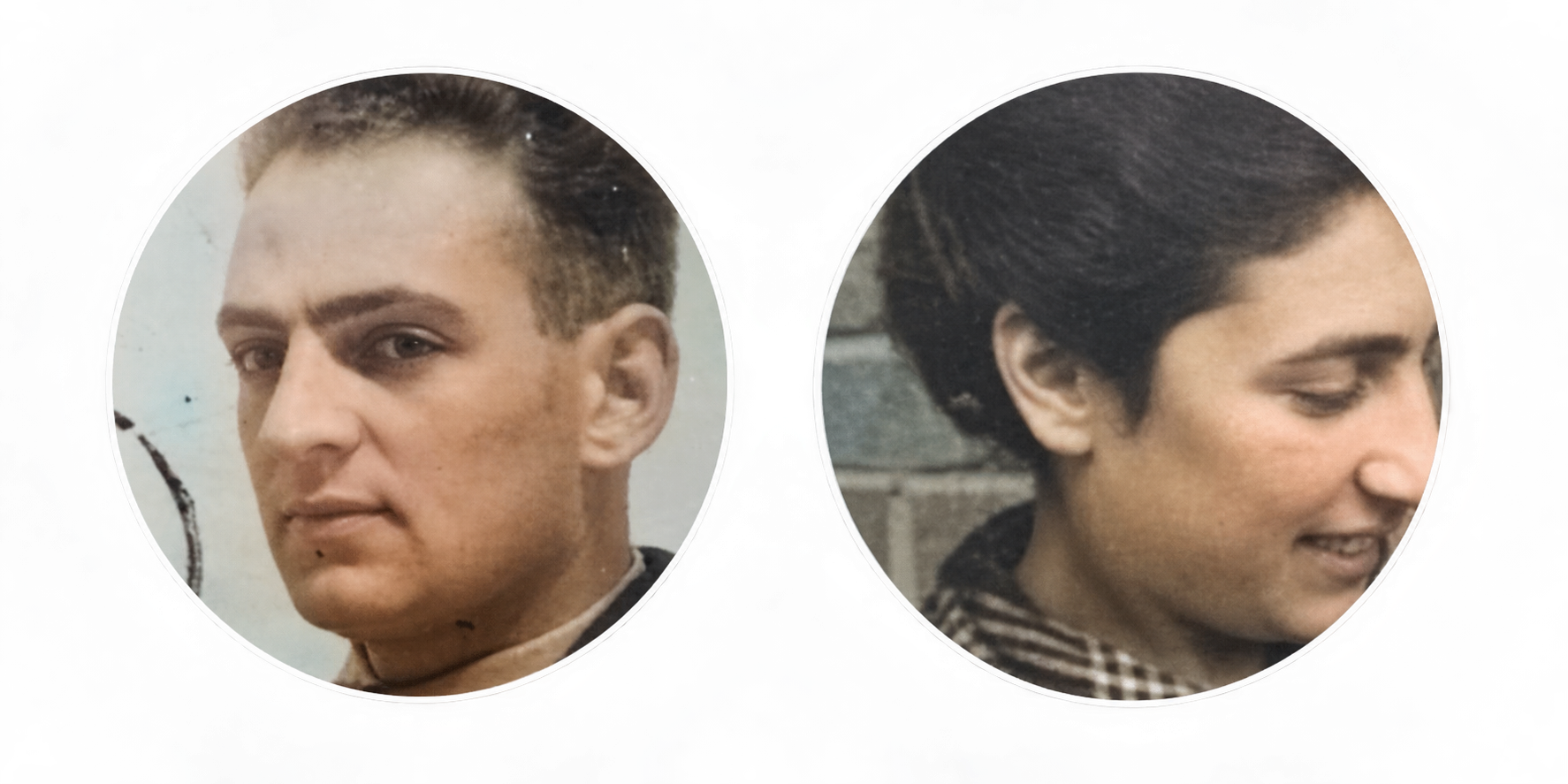
All we had was a first name. We knew he was a Jewish employee at the GEB, with a wife and two children. All four had gone into hiding very early in the war. His boss at the GEB spoke very highly of him, and his account of the day he was forced to dismiss him is quite emotional.
By comparing the employee records with the transport lists from Camp Westerbork, I was able to find his surname and the full names of his family. Both parents had been taken to Westerbork and then to Auschwitz and Buchenwald, where they died.
Their daughter had survived the war and apparently moved to Sydney, Australia, where she died in the 1990s.
I could find nothing about their son in the usual archives or war-related websites.
I didn’t give up, though, and eventually found his name on a social media site. He had recently given a talk about his experience of hiding as a child during the war. He was still alive, and I managed to find him and arrange a very special lunch. He was 87 years old, with many stories of his own. It was the first time he had heard his father’s boss’s account, the very account that had prompted the search in the first place.
COMPLETED RESEARCH
The crash-site of an Uncle
On 18 September 1944, a huge armada of planes and gliders was on its way to Holland for the second day of the Market Garden battle. One of the planes was hit just as it crossed the Dutch coastline. It released the glider it was towing and managed to circle down towards an airfield, where it landed. The crew jumped out and immediately came under fire from German soldiers stationed there. The co-pilot was shot and killed; the rest of the crew was taken prisoner.
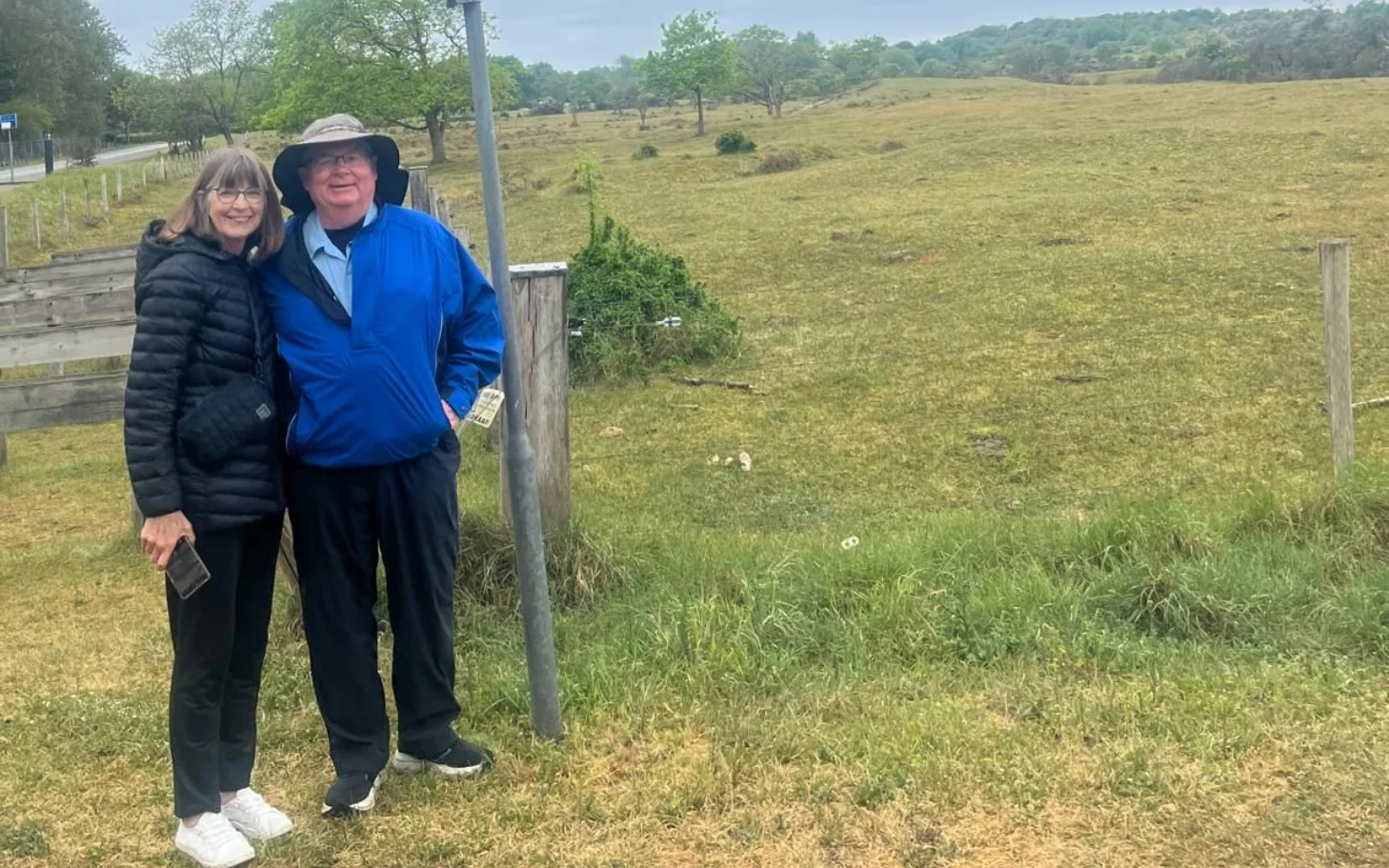
The co-pilot’s niece contacted me with some information about her uncle and what she knew about the crash, and asked if I could take her to the place where he had been shot. I did some research of my own, found the crash site near Haamstede airfield, and worked out where the firefight had taken place. We went there and visited the cemetery where he had been buried for a few years. It was a rewarding and emotional day for my guests.
COMPLETED RESEARCH
A soldier in hiding
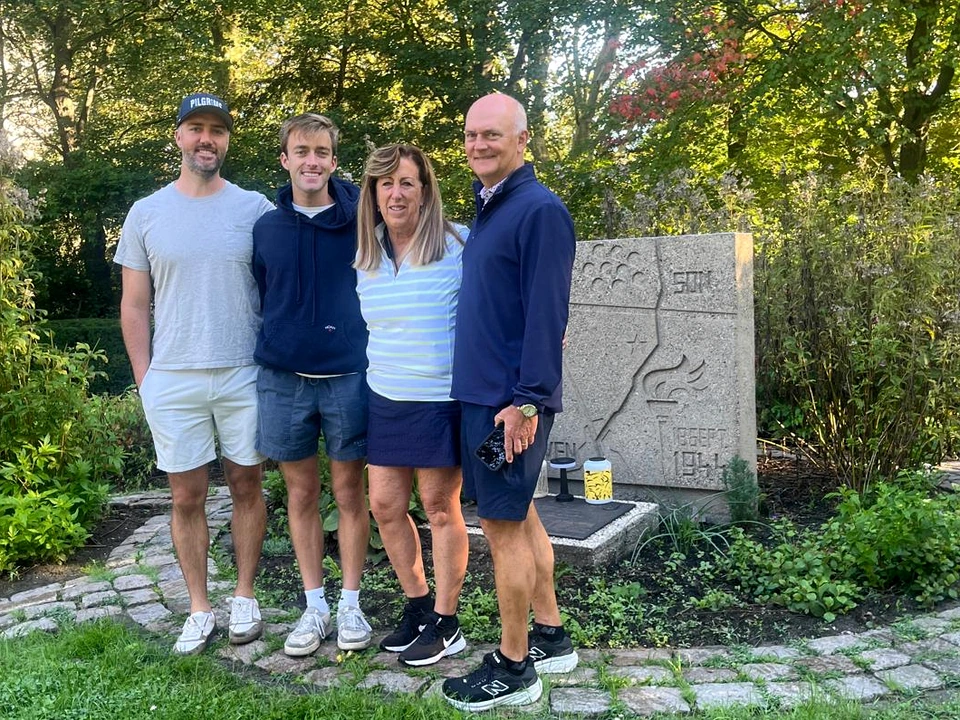
On 18 September 1944, the 101st Division landed near the bridges at Son and Veghel for Operation Market Garden. The bridge at Son was blown up, but the paratroopers managed to cross the canal and tried to liberate Eindhoven. The following day, during heavy fighting with the German defenders, a company commander was badly wounded by a sniper. He managed to hide on a farm, crawled back to his lines and was taken to a shelter, then later to a hospital in Belgium. For him, the war was over.
His daughter and her family asked me to show them the places where all this had happened and, during a two-day trip, guide them through Operation Market Garden as a whole. The farm and the places where her father was wounded are now part of urban Eindhoven, but we still managed to work out where he had been and how events had unfolded. Putting his story into the context of the wider operation helped them understand it all.
COMPLETED RESEARCH
A Canadian crossing
The Market Garden battle is famous, not least because it ultimately failed to achieve its objective. The bridge at Arnhem was a bridge too far. Arnhem was not liberated until much later, in April 1945, by Canadian and British troops.
This operation, called Operation Anger, is much less talked about, but for the soldiers involved it was, of course, just as significant.
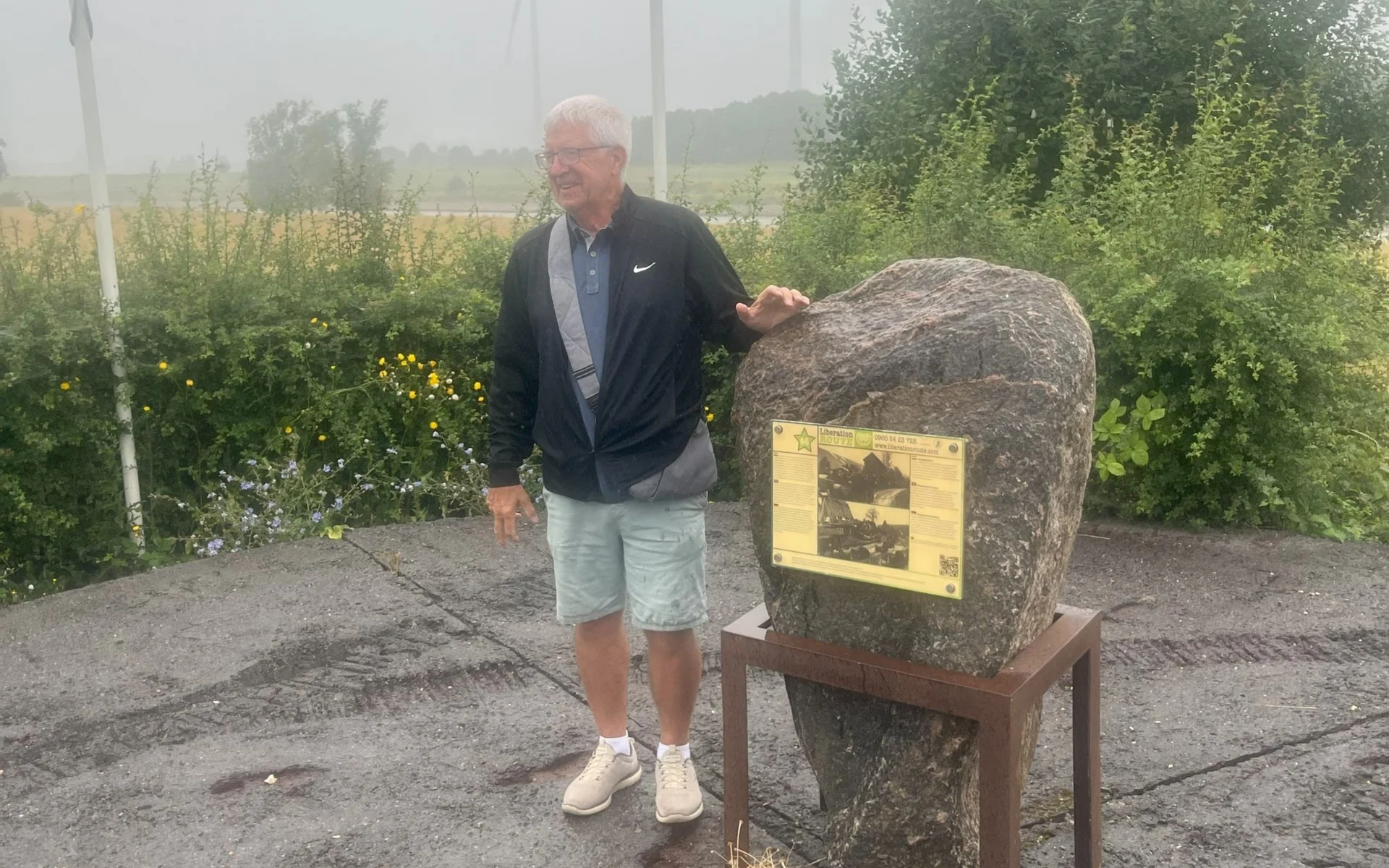
The exact crossing point of the IJssel River is marked by a monument, where I took the son of one of the soldiers involved. We first visited his training grounds south of Nijmegen and, of course, went into Arnhem to get a sense of what they were fighting for.
RESEARCH FOR YOU
Have a historical question of your own?
The projects above are my own investigations. I also carry out historical research for families and organisations, with or without a journey to the places involved.